
adopted July 1997
Standard Guide for
1. Scope
1.1 This guide presents the various methods and devices that have been successfully used to monitor and evaluate geosynthetic performance in the field.
1.2 While this guide covers all types of geosynthetics, and monitoring for all types of applications, the reinforcement area using geotextiles and geogrids is the most advanced. As such, it supersedes the previous GRI Standard GS3.
1.3 This guides focuses not only on the geosynthetic material, per se, but also on the adjacent soil, e.g., geosynthetics used in separation, filtration and drainage application. In this regard it is the geosynthetic related system that is being monitored.
2. Referenced Documents
2.1 General Reference
Koerner, R. M., 1996, "The State-of-the-Practice Regarding In-Situ Monitoring of Geosynthetics," Proc. Geosynthetics: Applications, Design and Construction, M. B. de Groot, G. den Hoedt and R. J. Termaat, Eds., EuroGeo I, Maastricht, Netherlands, A. A. Balkema Publisher, pp. 71-86.
2.2 Specific References
(see section 14)
3. Summary of Guide
3.1 This guide describes state-of-the-practice (not state-of-the-art) methods and devices for the in-situ monitoring of geosynthetics and geosynthetic related systems. As such, all of the methods and devices that are described have shown successful performance in the past and are referenced in the open literature.
3.2 All of the devices that are included in the guide are commercially available, or can be assembled using commonly available materials.
3.3 The guide contains specific recommendations as to both recommended and optional methods and devices to be used with different geosynthetics.
3.4 The guide also gives selected descriptions and commentary on the various methods and devices that are recommended.
3.5 The guide is organized around each particular type of geosynthetic on the basis of the particular function that the geosynthetic is called upon to serve.
4. Significance and Use
4.1 The guide is meant to provide information to owners and/or regulatory agencies that the geosynthetic or geosynthetic related system is performing safely.
4.2 The guide is meant to provide information to the engineer and/or manufacturer that the methods utilized in design are realistically providing technically sound, yet economical, installations.
4.3 The guide provides information to the potential user of the geosynthetic that is under consideration about the variety of monitoring methods and devices that are available.
4.4 The guide organizes and categorizes the potential methods and devices in such a way as to be compatible with the primary function that the geosynthetic may be called upon to serve.
5. Structure of Guide
5.1 In this guide, the in-situ monitoring of each type of geosynthetic or geosynthetic related system will be addressed by its primary function in the order presented in Table 1.
5.2 Where appropriate, monitoring of the adjacent soil, rock or structure will also be included. When liquid is the medium of interest, e.g., in filtration or drainage, its monitoring will be addressed accordingly. Thus, the guide addresses in some cases the monitoring of the geosynthetic related system, not only the geosynthetic material itself.
Table 1 - Geosynthetics and their Associated Primary Functions
     Type of                          Various Primary Functions
  Geosynthetic      Separation   Reinforcement   Filtration  Drainage     Barrier
geotextile              -             -             -              -       - *
geogrid                                                                 -
geonet                                                 -
geomembrane                                                                -
geosynthetic                                                               -
clay liner
geocomposite            -           -             -             -          -
*when
modified to be relatively impermeable6. Monitoring of Geotextile Systems
This section focuses on geotextile related applications serving the primary functions of separation, reinforcement, filtration, drainage or as a liquid barrier. Each function will be addressed in separate subsections.
6.1 Geotextiles in Separation
Geotextiles as separators are often thought of as being rather minor applications. Yet, they are generally permanent and can be critical in their application. In this section, the monitoring of three specific areas will be described;
An early project involving the in-situ monitoring of railroad track systems with geotextiles as separators was a full scale comparative test site described by Richardson (1985) and Chrismer and Richardson (1986). Four different needle punched, nonwoven, geotextiles were placed on a soil subgrade with railroad ballast placed above. Each section was 90 m in length. Control sections having no geotextiles were also constructed. The railroad ties and track were placed on the ballast in a uniform and conventional manner. The monitoring associated with the project was extensive, see Figure 1. Included were the following;
6.1.2 Highway Applications
A similar use of geotextiles as separators between soil subgrade and stone base course materials in highway pavements is another major application area. The general focus of monitoring is to gather information for quantification of the benefit/cost ratio of the geotextile solution versus a soil separating layer, or no separator at all. Instead of monitoring the geotextile or soil/water system beneath the geotextile, it is usually the surface of the paved highway that is monitored. In this regard, there are a number of techniques which can be used by themselves or in combination with one another, e.g.,
In a significantly different application than those described above, geotextiles have long been used as protection materials against the puncture of geomembranes. A common situation is in landfills where the geotextile acts as a separator between overlying coarse drainage stone and the underlying geomembrane hydraulic barrier. A major effort in assessing the performance has been expanded in Germany. While not in-situ monitoring, per se, Heerten (1994) has field exhumed a number of field sites to visually observe the effects of the stones insofar as geomembrane indentation is concerned. Brummermann, et al. (1994), has quantified the geomembrane indentations to arrive at a maximum strain value. Their study is based on graphic methods utilizing the segment of a circle or on a polygon shaped protrusion. Unfortunately, there is no current method of in-situ monitoring other than leak detection of penetrations in the geomembrane from unsatisfactory performance. Such leakage monitoring will be described later. Clearly, the need for protection monitoring material effectiveness is an area for future development.
6.2 Geotextiles in Reinforcement
Geotextiles as reinforcement materials have been a major topic for in-situ monitoring. Three categories of geotextile reinforcement can be identified: embankments over soft soils, reinforced walls and reinforced slopes. Regarding embankments over soft soils, pioneering work reported by Sluimer and Risseeuw (1982), Risseeuw (1984) and Risseeuw and Voskamp (1984), led to a technique of applying 100 mm long electrical resistance strain gages directly on high strength geotextiles for measurement of strain, see Appendix "A". Critical is the preparation and bonding of the gage to the geotextile, its waterproofing and protection materials and the procedure of extending the wire leads to the monitoring station. This work has lead to the routine use of such geotextile monitoring for a wide range of applications, for example;
The output of each gage is in strain units. They can usually function up to 8-10% strain at which point debonding begins to occur. To accomplish conversion to stress units, a stress vs. strain calibration curve from a wide width laboratory tensile test of a representative test specimen is necessary. The original survival rate of such gages during construction was low, however, current projects indicate that a 50 to 75% survival rate of such installations should be possible.
Electrical resistance strain gages, however, are not the only method of monitoring geotextiles used as reinforcement. Bourdeau, et al. (1994) report on the use of inextensible flexible cables, which result in deformation at the point of attachment. By comparing adjacent point deformations, strain over a considerable distance can be calculated and converted to stress as deemed necessary. This approach has been used by Guglielmetti, et al. (1996) for monitoring the deformation across the seams of high strength geotextiles. By attaching wire strand to both sides of a sewn seam, the deformations across the seam were monitored. Unfortunately in the case history sited, the results were questionable due to an insufficient slack and lack of dead weight tensioning of the wire strands. Unless all slack is removed in the strand, the accuracy of the measurements will be suspect at least for small deformations.
In the categories of reinforced walls and slopes a very early effort was carried out by Delmas, et al. (1988). They instrumented a 4.0 m high wrap-around geotextile wall with electrical resistance strain gages on the foundation beneath the wall and surveying points on the face of the wall. Short term movement after removal of the falsework and long term movements after placement of a surcharge load were the monitoring objectives. The wall, built in 1971, was one of the earliest attempts at this type of construction and accompanying monitoring.
Graf and Studer (1988) have assessed a number of instrumented walls and slopes where the usual monitoring was for determination of tensile forces in the reinforcement, displacements at various locations in the soil mass and soil pressures at the face and/or foundation interfaces. Their goal was to verify design concepts and assumptions.
More recently Rowe and Gnanedran (1994) report on a number of strain measurement techniques on a high strength geotextile reinforced test embankment. Included were electrical resistance strain gages, mechanical gages for deformation and electromechanical gages consisting of thin metal rings fastened to the geotextile.
Needless to say, the state-of-the-practice of direct monitoring of geotextile reinforcement using strain gages or deformation gages is well advanced at this point in time.
6.3 Geotextiles in Filtration
Since the initially reported cases of using geotextiles as filters in the 1960's (recall that an original name of geotextiles was "filter fabrics") related applications have expanded tremendously. Highway engineers throughout the world regularly use geotextiles instead of the conventional 150 mm thick sand filter layers of the past. Visual observations attest to the viability of their use. In-situ monitoring is essentially a moot point with the notable exception of contaminated liquids like landfill leachates. In such cases the focus of the monitoring is not the geotextile, per se, but the possible head of leachate buildup above the geotextile.
An example of such an in-situ monitoring system is at a Canadian landfill, Pullen (1995). The instrumentation system measured leachate levels above the leachate collection system, (which included a geotextile filter) within the solid waste itself. The system consisted of a level meter and recording system, which pneumatically measured back pressure on the filter. It then converted the analog signal to digital data for continuous display and storage within an internal memory unit. The stored data was downloaded by software to a laptop computer. The data was placed on a spreadsheet for analysis and graphing. All measurements were recorded in real time. Periodically, the memory of the data logger was downloaded and the file analyzed and graphed for long-term records.
Examples such as the above appear to focus on the major concern of geotextile filters, i.e., the possibility of excessive clogging. Clearly, upgradient monitoring of pore pressures is within the state-of-the-practice. Alternatively, outflow from the system could be monitored along with sediment yield. This is routinely done during the collection of leachate from waste facilities. Information on flow rates over time are available for qualitative assessment, Bonaparte and Othman (1996).
6.4 Geotextiles in Drainage
To monitor the performance of geotextiles in drainage applications, the obvious procedure is to actually measure the liquid's flow rate as it passes within and/or through the geotextile. Yet, for most geotextiles such flow rates are relatively small, e.g., in comparison to a geonet or drainage geocomposite. Thus emphasis in geotextile drainage applications is on liquid heads or on pore water pressures within the geotextile or adjacent upstream soil. However, there are no known monitoring case histories focused on geotextile drainage applications at this point in time.
6.5 Geotextiles as Barriers
Geotextiles as moisture barriers have their greatest applicability when used in highways to retard reflective cracking in bituminous overlays. The Liege conference on this topic presented a significant accumulation of literature on the subject, Rigo and Degeimbre (1989). The usual focus of field monitoring has been at the surface of the bituminous overlay. Various papers described the following;
None of the papers, however, described the monitoring of the soil subgrade or stone base course beneath the pavement structural section. Note that there have been two subsequent conferences on this same topic, RILEM (1993 and 1996).
Geotextiles impregnated with bitumen or polymers, and geotextiles used as substrates for factory placed bituminous layers, used as liners for environmental applications will be considered later. In those cases, the focus will be on leakage rates from landfills or surface impoundments where a number of monitoring strategies are possible.
7. Monitoring of Geogrid Systems
The primary function of geogrids is generally that of reinforcement. When the system is permanent and/or of a critical nature, in-situ monitoring may be considered. Numerous studies on walls, slopes and foundation reinforcement applications are available. The focus is usually on the geogrid itself, where short term strains and long term creep and/or stress relaxation are the general monitoring goals.
7.1 Geogrid Wall Reinforcement
By their very nature, vertical walls are critical structures. In-situ monitoring of unitized geogrids using electrical resistance strain gages bonded directly to the longitudinal (high stressed) ribs is an outgrowth of laboratory testing, McGown, et al. (1984). An early field application by Jones is reported in Parkinson (1983). Appendix "B" presents the technique of bonding a strain gage to a unitized geogrid at its minimum cross section whereby stresses are the highest. Many geogrid projects have been monitored in this manner. Alternatively, on flexible geogrids one could use inductance coils, see Appendix "C". While relatively large in size, an LVDT protected within a sliding guide tube has also been used, Barr, et al. (1994).
Other than monitoring the geogrid itself, horizontal extensometers have been used to monitor long-term creep deformation of the backfill soil. Presumably, if the soil is moving, the reinforcement is not functioning as intended. Additionally, the pressures exerted against the wall facing can be monitored. Berg, et al. (1986) used load cells against two large geogrid reinforced walls and found relatively low lateral pressures. Coupled with low values of measured strains in the geogrid reinforcement, the implications were that current design methods are probably conservative.
7.2 Geogrid Slope Reinforcement
Paralleling the geogrid wall reinforcement monitoring just described, steep soil slopes have also been monitored. Devata (1984) reports on electrical resistance strain gages bonded directly to unitized geogrids along with horizontal magnetic extensometers to monitor soil creep. Hermann and Burd (1988) report on the instrumentation of a geogrid reinforced steep slope used as a snow avalanche barrier. The geogrids were designed as wrap-around facings on both sides of the barrier, see Figure 2. The instrumentation consisted of the following;
The intention was to provide in-situ performance to check on assumptions made during the design process.
7.3 Geogrid Foundation Reinforcement
Geogrids have been used in many foundation reinforcement configurations. Soft soil foundation monitoring reported for geotextiles has a complete parallel when geogrids are used. There are, however, additional cases of foundation reinforcement monitoring that can be presented.
Alexiew, et al. (1995) report on the monitoring of flexible geogrids used to reinforce soil over the pile caps of deep foundations, see Figure 3. The geogrids reinforce the overlying soil between the relatively wide spaced pile caps and eliminate the need for battered piles at the edges of the embankment. The instrumentation, described by Verspohl and Gartung (1995), consisted of the following;
The focus of the study was to assure the adequacy/safety of the system but also to validate the accuracy of the "membrane-effect" design model that was used, see Jones, et al. (1990).
8. Monitoring of Geonet Systems
The primary function of a geonet is its in-plane drainage capability. Generally the medium is liquid, although gas transmission is also a possible application area. Regarding in-situ performance, the geonet's inflow versus outflow is the obvious target to monitor. While various flow monitoring schemes (like tipping buckets) can be used, one large scale case history involving geonets will be described here.
In constructing liners for landfills, the use of double containment is considered by many to be the ultimate in providing for a safe and secure facility. Between the upper and lower barrier layers, a drainage system is required. Its purpose is to monitor (and collect) leakage coming through the upper liner. The drainage layer is often regulated as being a 300 mm thick layer of sand of high permeability. Alternatively, a geonet can be used, if shown to be technically equivalent.
In a case history reported by Eith and Koerner (1992), 25,000+/- liter charges of water were introduced in a geonet at the upgradient side of a 192 m long rectangular landfill cell and recovered at the downgradient sump. The first charge of water produced an in-situ transmissivity of the geonet calculated as being 45.2 x 10⁻⁴ m2/s, see Table 2. After approximately 14 m of solid waste was placed in the 1.5 ha landfill, the flow test was repeated with a resulting transmissivity of 43.5 x 10⁻⁴ m2/s. A third flow test was conducted after 28 m of solid waste was placed, with a resulting transmissivity of 40.0 x 10⁻⁴ m2/s. The slight decrease of transmissivity was attributed to the increasing geomembrane intrusion into the apertures of the geonet by the increased pressure of the solid waste. The test was a success and resulted in geonets being substituted for the sand drainage layer. The case history represents the ultimate in in-situ monitoring, wherein the entire system to be evaluated is challenged in-toto.
Table 2. Summary of full scale flow tests on a geonet leak detection system, after Eith and Koerner (1992).
               Situation or Condition                  No-load   Mid-load   Full-load
Dates of test                                           18-19    22-23        15-16
                                                      Nov. 1987  Dec. 1987  Mar. 1988
Diameter of HDPE injection pipe, mm                      100     100           100
Diameter of HDPE exit pipe, mm                           100     100           100
Diameter of detection manhole, m                        1.82     1.82          1.82
Total cell area, ha                                     1.54     1.54          1.54
Approximate geonet wetted area, ha                      0.87     0.87          0.87
Approximate geonet wetted width (maximum), m            45.7     45.7          45.7
Straight line geonet flow distance, m                    192     192           192
Elevation of point of injection, m                      95.07    95.07        95.07
Elevation of geonet discharge sump and secondary        89.95    89.95        89.95
boot, m
Approximate cell bottom slope, %                         2.9     2.9           2.9
Volume of water injected, liters                        2612     2321          2268
Approximate time interval for injection, min             18      17             12
Volume of water recovered at 15 hours, liters           2453     2079          1841
Percent of injected water recovered at 15 hours, %      93.9     89.6          81.2
Time interval between injection and arrival at           100     104           113
detection manhole, min
Maximum peak instantaneous flow recorded, liters/min    28.2     29.7          29.7
Approximate height of waste (at 10.8 kN/m3 unit          1.1     13.9          28.3
weight), m
Approximate geonet compressive stress, kPa               12      153           311
Calculated transmissivity, m2/s                        45.2 x    43.5 x     40.0 x
                                                        10-4     10-4       10-4
9. Monitoring of Geomembrane Systems
The primary function of geomembranes is usually that of a barrier to liquids or occasionally to gases. As such, leakage through the geomembrane is obviously the key parameter to monitor. There are many candidate leak detection systems. In this paper, they will be subdivided into stationary, portable and global systems. First, however, other design related and important geomembrane monitoring concerns such as in-plane and out-of-plane tensile stresses will be described. Temperature monitoring is important and will also be described.
9.1 Geomembrane Stress Monitoring
While general design practice is not to induce tensile stresses in geomembranes, there are two situations where some tensile stressing is inevitable. These are in-plane tensile stresses on side slopes caused by the overlying soil or solid waste, and out-of-plane tensile stresses caused by subsiding soil or solid waste.
Regarding the monitoring of in-plane tensile stresses, the situation is quite straightforward. Electrical resistance strain gages bonded directly to geomembranes have been used, see Koerner and Wayne (1991), see Appendix "B". Yazdani, et al. (1995) have used a series of such gages beneath solid waste from the base up the side slopes and into the anchor trench. Strains were maximum at the top of slope (0.12 to 0.83%) and diminished progressively down the slope. At the base of the slope and along the bottom, the tensile strains were essentially zero.
Regarding the monitoring of out-of-plane tensile stresses, the same type of electrical resistance strain gages have been used to monitor geomembranes during the densification of the overlying solid waste using deep dynamic compaction. Galenti (1994) reports on twin 2 ha cells (one compacted by standard methods, the other by deep dynamic compaction) where the gages monitored the dynamic pulses and the residual strains in the underlying geomembrane. The pulses were indeed detected, but no residual strains were indicated upon cessation of the compaction activity.
A related concern regarding out-of-plane tensile stresses has to do with vertical and horizontal expansions of landfills. The surcharge load created by the proposed solid waste expansion will cause settlement of the existing solid waste. The concern is not over total settlement which can be estimated, but over differential settlement. Since this type of settlement promises to be quite random in its occurrence, the location of the strain gages represents a major challenge. Clearly, this is an area for additional investigation.
9.2 Geomembrane temperature monitoring
Temperature monitoring of geomembranes used for solid waste landfill containment is another area for which feedback to the design community is necessary. Koerner and Koerner (1995) report on the temperature monitoring of a geomembrane liner, the leachate collection system, the solid waste itself and the geomembrane cover. The temperature was monitored by thermocouples which consist of dissimilar metals in which a continuous current flows. For this case history, the thermocouple wires were bonded to the area of concern and the thermocouple wires were brought to the monitoring station. The system consisted of 20 monitoring units. The only equipment required was a reference junction compensation unit. Thermocouples are robust and quite cost effective for temperature monitoring. Table 3 presents temperatures recorded over a 3-year period at this municipal solid waste landfill which is a 4 ha site with approximately 30 m of waste. The project is still ongoing.
Table 3. Temperatures monitored at a municipal solid waste landfill near Philadelphia over a three year period, Koerner and Koerner (1995).
            Location               Min. Temp.      Ave. Temp.     Max. Temp.
geomembrane beneath waste         17deg.C        21deg.C         24deg.C
leachate collection stone         14             17              20
beneath waste
within the solid waste itself     15             24              30
geomembrane above waste           3              24              35
covered by 3 m of soil
9.3 Stationary Leak Location Monitoring
The concept of placing electrically conducting wires on an orthogonal grid pattern beneath a geomembrane has been brought from the laboratory to the field over the past 10 years, Koerner, et al. (1984). The wires are used as conductors for electrical transmission, time domain reflectrometry or acoustic emission monitoring to sense if, and where, a leak is occurring. The accuracy of location of a leak depends on the spacing of the wires. The wires can also be woven into a geotextile which is placed beneath the geomembrane being monitored. In this case, the wire pattern remains fixed and a puncture protection material is also provided. Stationary electrode placement is another concept which follows along similar lines.
The readout from these systems is an electrical pattern which of itself may give the leak location or may be compared to previous readings to determine if significant changes are occurring.
There are numerous organizations providing monitoring services of this type. Some have proprietary and/or patented systems. The workshop on liner leak monitoring and location technologies in these proceedings provides additional insight into this category of monitoring.
9.4 Portable Leak Location Monitoring
The concept of constructing a geomembrane lined facility, covering it with a nominal amount of water and then creating an electric field dates to the early 1980's; Schultz, et al. (1984) and Darilek, et al. (1989).
An electrical source is used to inject current across the boundary of the geomembrane. When a current is applied between the source and remote return electrodes, current flows either around the entire site (if no leak is present) or bypasses the longer travel path through the leak itself (when one is present). Potentials measured on the surface are affected by the distributions and can be used to locate the source of the leak. These potentials are measured by "walking" a probe in the water. The operator walks on a predetermined grid layout and marks where anomalies exist. The technique must be modified where water does not cover the geomembrane, e.g., on side slopes.
For situations where the liquid is deep, as in existing surface impoundments, or hazardous liquid impoundments, a remote probe can be floated or dragged from one side of the facility to the other. There are many variations on this theme as reported by Peggs (1993).
9.5 Global leak monitoring
Perhaps the most reliable and fail-safe method of monitoring for geomembrane leakage is to provide a complete drainage system, i.e., construct a global lysimeter, beneath the geomembrane in question. This, of course, requires a secondary geomembrane beneath the drainage layer and is the essence of the double liner system. Such double lined systems with an intermediate drainage layer (soil or geonet) are mandated in the USA and Germany for hazardous waste landfills. The drainage layer, aka leak detection layer, flows gravitationally to a sump where a pipe riser is located. This pipe is placed between the two geomembranes and penetrates the primary geomembrane at the surface. It exits accordingly for eventual monitoring using a submersible pump, see Figure 4. This monitoring design is in considerable favor over vertical manhole risers through the waste and gravity flow penetrations passing through the secondary liner system. In the former case, negative skin friction generating large downdrag forces are created by the settling waste mass. In the latter case, the penetration of the secondary liner system is very troublesome from a construction perspective and it occurs at the lowest elevation of the facility where leachate heads are the highest.
Such systems are powerful controls on the performance of geomembranes and are mandated by a number of states in the USA for municipal solid waste as well as for all types of hazardous waste.
The above concept of the double liner strategy with leak detection has recently entered a new era with the advent of the Vienna Cutoff Double Wall System, Brandl (1994). The double liner concept is used but now in a vertical deployment as shown in Figure 5(a). It is illustrated for both abandoned waste sites and newly constructed landfills. Figure 5(b) shows the double wall system with a geonet leak detection layer between the two geomembranes. Figure 5(c) shows an important variation of the concept where the primary and secondary geomembranes are segmented by cross walls which compartmentalize the leakage. Thus the leakage can be isolated to specific zones. This concept provides an excellent strategy for monitoring and controlling leakage from waste sites and is felt to be the essence of an environmentally safe and secure containment system.
10. Monitoring of GCL Systems
As with geomembranes, the primary function of geosynthetic clay liners (GCLs) is as a barrier layer. Leakage is again the key monitoring variable and all of the discussion in the previous section is applicable to GCLs as well as with geomembranes. Additionally, one might measure the in-situ permeability of the GCL as is conventionally done with compacted clay liners, see Didier and Cazaux (1996). There is one additional aspect of monitoring GCLs, however, which should be addressed.
GCL's owe their low permeability to bentonite which is contained between two geotextiles or bonded to a geomembrane. With the bentonite hydrated, its permeability is approximately 1 to 5 x 10-11 m/sec thus making GCLs excellent barrier materials. Along with this low permeability, however, is a concern over low shear strength. Three interfaces are involved; the upper and lower interfaces, and within the midplane of the GCL. Obviously, steep side slopes are locations of particular concern.
Tanays, et al. (1994) report on geomembrane/ GCL composite lined side slopes of a set of four landfill waste cells. Instrumentation was installed on two cells (at 1:1 and 1:2 slopes) to assess their behavior. The geomembranes were monitored for tensile forces using electronic transducers. Data was provided for up to 100 days. The GCL components were monitored for deformation between points spaced at 0.5 to 0.7 m distance from one another. Each point was brought by a cable protected in a tube extending to the top of the slope. Strain in the lower portion of the GCLs amounted to 1.0 to 1.5 %. At the top of the GCLs, it was zero.
In another case history, the focus of the monitoring program was the midplane shear deformation of GCLs, Koerner, et al. (1996). Fourteen full scale test plots had five different types of GCL's deployed on 1:2 and 1:3 slopes. Various landfill cover situations were simulated by using GCLs in association with geomembranes, drainage geonets and erosion control materials. Monitoring included gypsum cylinders for subgrade moisture content, fiberglass wafers for bentonite moisture content and wire "telltales" for GCL midplane deformation monitoring. Ten sets of telltales were placed on the GCLs at each of the fourteen test plots. Each set consisted of a deformation monitoring point on the top and a companion point on the bottom of the GCL. Thus deformation differences between top and bottom indicated differential movement of the GCLs within their midplane. The monitoring points were flattened fish hooks embedded in the geotextiles and geomembranes and epoxy bonded in the localized area. Connected to each point were stainless steel wires protected in plastic tubes extending to the top of the slope. By observing movement of the wires on a measurement table, relative deformation of each set of top and bottom points was obtained. Table 4 presents the differential deformation at the toe of slope of the various test plots 330 days after construction and 160 days after cutting the upper geosynthetics to transfer stresses to the midplanes of the GCLs involved. Plot "F" is in a obvious state of major movement with the top surface moving with respect to the bottom. It has recently slid as a complete soil/upper geomembrane mass.
Table 4. Relative deformation of GCLs at Cincinnati test plots at toe of slopes 330 days after construction, Koerner, et al. (1996).
  Plot        Product      Bottom of Left Panel      Bottom of Right Panel        Average
                                   (mm)           (mm)                        (mm)
    A         Gundseal                       +13  -8                                 +2
    B         Bentomat                       +23  -13                                +5
    C         Claymax                         -8  +5                                 -1
    D       Bentofix II                       +5  -5                                  0
    E         Gundseal                       +20  -5                                 +7
    F         Gundseal                      +18-                   +500            +340
    G           n/a                           --                     --              --
    H           n/a                           --                     --              --
    I        Bentofix I                        0                    -25             -13
    J         Bentomat                        +8                    -25              -8
    K         Claymax                        +25                    +25             +25
    L        Bentofic I                      +15                     -5              -5
    M           n/a                           --                     --              --
    N       Bentofix II                       -8  +8                                  0
"+"
= top of GCL moves with respect to bottom
11. Monitoring of Geocomposite Systems
The primary functions that geocomposites can serve are obviously product specific. Since geocomposites used in reinforcement, filtration and barrier applications are similar to those described previously they will be referenced to the appropriate section. Thus, this section only considers separation and drainage functions which have some unique monitoring schemes.
11.1 Geocomposites as Separators, i.e., Geosynthetic Erosion Control Materials
There are literally hundreds of geosynthetic erosion control materials. They combine polymeric geotextiles, geonets and geogrids with natural materials (straw, hay, mulch, coir, etc.) in very interesting and innovative products. When deployed on slopes, their effectiveness is usually monitored by the measurement of water runoff and sediment yield at the toe of the respective slopes. For open channels, vegetation density increases over a specific period and resistance to velocity and shear stresses also increases. Many studies of this type have been conducted; Armstrong and Wall (1991), Fifield and Malnor (1990) and Northcutt (1993). In all cases, the results are comparative from one system to another, and to a control section with no erosion control protection. The latter is used as the base line. Many of these projects are focused on product categorization and selection, but others are intended to provide input to formulating design methods for predictive purposes. It is an active area of research.
Hundreds of field studies have been conducted since the early 70's that measure sediment loss and vegetated density increases on geosynthetic-protected and unprotected soil slopes. Monitoring of these slopes vary from immediately after installation to a three year "resting" period. Included in the data collection should be: plant height, percent seed germination, sediment loss, infiltration rate, rill/gully depth and visual observations.
11.1.2 Open Channels
Studies of the effectiveness of geosynthetic flexible channel lining materials have been made since 1980. Although most have shown the benefits of reinforced vegetation, the studies are either: (1) conducted shortly after installation; or (2) made using rain gauge data from major storm events. In either case, data used in the evaluation should include design storm discharges, vegetative coverage/establishment, average height before mowing, depth of accumulated sediment, total rainfall during storm events, depth of erosion (if any) and visual observations.
11.2 Geocomposites in Reinforcement
This category is similar to that of geotextiles in reinforcement (section 6.2) and geogrids in reinforcement (section 7.1, 7.2 and 7.3).
11.3 Geocomposites in filtration
This category is similar to that of geotextiles in filtration (section 6.3).
11.4 Geocomposites as highway edge drains
Geocomposite drains usually fall into categories of sheet drains, wick drains and edge drains. Of these, edge drains result in very cost effective systems providing they function for the lifetime of the associated highway system. Concerns over core blockage and geotextile clogging are often expressed and in-situ monitoring is one way to assess the performance behavior.
Dempsey (1988, 1989) has measured numerous highway edge drain installations. The basic unit is a tipping bucket at the outlet of the edge drain. When full, the bucket empties and a counter is engaged. The number of bucket tips provides the needed data to calculate a flow rate. For higher flow rates, outflow monitoring weirs can be setup along with a data logger for the desired data. For very high flow rates, automatic flowmeters can be used.
11.5 Geocomposites as barriers
This category is similar to that of geotextiles as barriers (section 6.5).
12. Summary
This standard guide has provided a wide range of in-situ monitoring methods/devices which have generally resulted in reliable data. While not known for sure, their survival rate is high, at least on a relative basis to other field monitoring methods. Note, however, that in some harsh construction installation situations, a 50% survival rate might be considered as being an acceptable survivability rate.
In order to summarize the wealth of information that exists, the format of Table 1 is preserved and superimposed on it are the methods described in this paper, see Table 5(a). The monitoring methods or devices are somewhat arbitrarily divided into recommended and optional categories. Table 5(b) gives a further description of the various methods/ devices listed in Table 5(a).
As mentioned in the introduction, the purpose of in-situ monitoring is generally to provide information as to the adequacy/safety of the installation or to provide design feedback. Both are important reasons to recommend or require in-situ monitoring. Clearly, such monitoring is the sign of a maturing industry which can assess itself and report to the user community accordingly.
13. Conclusions
It should be noted that the cost of monitoring was never mentioned. This is for a number of reasons, among which are the following;
Hence each situation is site-specific and costs must be assessed on a case-by-case basis.
It is important to conceive and execute a monitoring plan with clear objectives in mind. Dunnicliff (1988) provides a methodology for organizing a monitoring program in geotechnical instrumentation. The checklist of specific steps that are recommended follows;
Table 5a. Summary of monitoring methods/devices revised in this paper and categorized accordingly.
 Geosynthetic    Function or Property       Recommended               Optional
     Type
  geotextiles    separation            * water content         * level surveying *
                                       measurements * pore     earth pressure cells *
                                       water transducers       inductance gages
                 reinforcement         * strain gages *        * earth pressure cells
                                       movement surveying *    * inductance gages *
                                       inclinometers *         pore water transducers
                                       extensometers           * water content
                                                               measurements *
                                                               settlement plates *
                                                               temperature
                 filtration            * water observation     * flowmeters *
                                       wells * pore water      turbidity meters *
                                       transducers             probes for pH
                                                               conductivity and/or
                                                               dissolved oxygen
                 drainage              same as geotextile filtration
                 barrier (e.g.,        * surface deflections   * water content
                 reflective cracking)  * level surveying *     measurements
                                       surface roughness
                                       measurements *
                                       profilometery (for
                                       rut depths) * crack
                                       surveying
   geogrids      walls                 * strain gages *        * earth pressure cells
                                       inclinometers *         * piezometers *
                                       extensometers *         settlement plates *
                                       monument surveying      probes for pH *
                                                               temperature readings
                 slopes                * strain gages *        * earth pressure cells
                                       inclinometers *         * piezometers *
                                       extensometers           monument surveying
                 foundations           * strain gages *        * earth pressure cells
                                       level surveying *       * piezometers *
                                       extensometers           settlement plates
    geonets      drainage              * flowmeters *          * probes for pH,
                                       turbidity meters        conductivity and/or
                                                               dissolved oxygen *
                                                               piezometers
 geomembranes    tensile stress        * strain gages
                 temperature           * temperature
                                       measurement
                 stationary leak       *   See Peggs (1996)
                 monitoring
                 portable leak         *   See Peggs (1996)
                 monitoring
                 global leak           * flowmeters *          * turbidity meters *
                 monitoring            downgradient wells      probes for pH,
                                                               conductivity and/or
                                                               dissolved oxygen
 geosynthetic    global leak           * flowmeters *          * turbidity meters *
  clay liners    monitoring            downgradient wells      probes for pH,
                                                               conductivity and/or
                                                               dissolved oxygen
                 shear strength        * extensometers *       * gypsum cylinders *
                                       deformation telltales   fiberglass wafers *
                                                               strain gages
                                                               (inductance coils)
 geocomposites   separation (e.g.,     * flowmeters *          * level surveying
                 erosion control)      turbidity meters
                 reinforcement         (same as geotextiles and geogrids)
                 drainage (e.g.,       * flowmeter *           * probes for pH,
                 edge drains)          turbidity meter         conductivity and/or
                                                               dissolved oxygen
                 barrier               (same as geotextiles, geomembranes and GCLs)
Table 5b. Selected description and commentary on the methods/devices listed in Table 5a.
       Category         Methods/Device            Resulting Value/Information
surveying               monument surveying        lateral movement of vertical face
                        level surveying           vertical movement of surface
                        settlement plates         vertical movement at depth
deformation             telltales                 measures movement of fixed rods or
                                                  wires can accommodate any
                                                  orientation
                        inclinometers             measures vertical movement in a
                                                  casing inclined movements up to
                                                  45deg.
                        extensometers             measures changes between two-points
                                                  in a borehole
strain measurement      electrical resistance     measures strain of a material over
                        gages * bonded foil  *    gage length, typ., 0.25 to 150 mm
                        weldable
                        inductance gages          measures movement between two
                        (coils) * static          embedded coils up to 1000 mm
                        measurements * dynamic    distance apart
                        measurements
                        LVDT gages                measures movement between two fixed
                                                  points 100 to 200 mm apart
stress measurement      earth pressure cells *    measures total stress acting on
                        diaphragm - type *        the cell, can be placed at any
                        hydraulic - type          orientation, can also measure
                                                  stress (pressure) against walls and
                                                  structures
soil moisture           water observation wells   measures stationary groundwater
                                                  level
                        gypsum cylinders          measures soil moisture content up
                                                  to saturation
                        fiberglass wafers         measures soil moisture content up
                                                  to saturation
groundwater pressure    piezometers * hydraulic   measures pore water pressures at
                        type * pneumatic type *   any depth can be installed as
                        vibrating wire type *     single point or in multiple
                        electrical resistance     point array can be placed in any
                        type                      orientation
temperature             bimetal thermometer       measures temperature in adjacent
measurement                                       area to +/- 1.0deg.C
                        thermocouple              measures temperature at a point to
                                                  +/- 0.5deg.C
                        thermistor                measures temperature at a point to
                                                  +/- 0.1deg.C
liquid quantity         tipping buckets           measures flow rates (relatively low
                                                  values)
                        automated weirs           measures flow rates (relatively
                                                  high values)
                        flowmeters                measures flow rates (very high
                                                  values)
liquid quality          turbidity meters          measures suspended solids
                        pH probes                 measures pH of liquid
                        conductivity probes       measures conductivity of liquid
                        dissolved oxygen probes   measures dissolved oxygen in liquid
Clearly,
such a checklist should be considered in planning for the in-situ monitoring of
geosynthetics whenever permanent and/or critical installations
are under consideration or are being otherwise challenged.
14. References
Alexiew, D., Gartung, E., Verspohl, J. and Kirschner, R., (1995), "A Geogrid Reinforced Railroad Embankment on Piles in Soft Subsoil," Proc. Russian National Conference on Soil Mechanics and Foundation Engineering, St. Petersburg, 23 pgs.
Armstrong, J. J. and Wall, G. J. (1991), "Quantitative Evaluation of the Effectiveness of Erosion Control Materials," Proc. 22nd IECA Conference, Orlando, pp. 167-179.
Barr, B., Austin, R. A. and Briddle, R. J., (1994), "Development of a Strain Monitoring System for Use with Buried Geogrids," Proc. 5th Intl. Conference on Geosynthetics, Singapore, pp. 437-440.
Berg, R. R., Bonaparte, R., Anderson, R. P. and Chouery, V. E., (1986), "Design Construction and Performance of Two Geogrid Reinforced Walls," Proc. 3rd IGS Conference, Vienna, pp. 401-406.
Bonparate, R. and Othman, M., (1996), "Various Concerns Regarding Waste Containment Systems," Final Report, U.S. EPA, Cincinnati, OH, (to appear).
Bourdeau, Y., Oganro, T. and Larael, P., (1994), "Use of Strain Gages to Predict Soil-Geotextile Interaction," Proc. 5th IGS Conference, Singapore, pp. 451-456.
Brandl, H., (1994), "Vertical Barriers for Municipal and Hazardous Waste Containment," Development in Geotechnical Engineering, Balasubramanian, et al., Editors, Balkema, Rotterdam, pp. 301-320.
Brummermann, K., Blümel, W. and Stoewahse, C., (1994), "Protection Layers for Geomembranes: Effectiveness and Testing Procedure," Proc. 5th Intl. Conf. on Geosynthetics, Singapore, IGS, pp. 1003-1006.
Chrismer, S. M. and Richardson, G. N., (1986), "In Track Performance of Geotextiles at Caldwell, Texas," in Rail Track and Structures, Transportation Research Record 1071, TRB, Washington, DC, pp. 72-80.
Darilek, G. T., Laine, D. L. and Parra, J. O., (1989), "The Electrical Leak Location Method for Geomembrane Liners: Development and Applications," Proc. Geosynthetics `89, IFAI, pp. 456-466.
Delmas, Ph., Blivet, J. C. and Matichard, Y., (1988), "Geotextile Reinforced Retaining Structures: A Few Instrumented Examples," Proc. on the Application of Polymeric Reinforcement in Soil Retaining Structures, P. M. Jarrett and A. McGown Eds., Kluwer Academic Publishers, Dordrecht, pp. 285-311.
Dempsey, B. J., (1988), "Core Flow Requirements of Geocomposite Fin Drain Materials Used in Pavement Subdrainage," Transportation Research Record No. 1159, Transportation Research Board, Washington, DC, 105 pgs.
Dempsey, B. J. (1989), "Hydraulic Requirements of Geocomposite Fin Drain Materials Utilized in Pavement Subdrainage," Jour. Geotextiles and Geomembranes, Vol. 8, No. 3, Elsevier, pp. 191-216.
Devata, M. S., (1984), "Geogrid Reinforced Earth Embankments with Steep Side Slopes," Proc. Polymer Grid Reinforcement, T. Telford, London, pp. 82-87.
Didier, G. and Cazuax, D., (1996), "Field Measurement of Permeability of Geosynthetic Clay Liners," Proc. 1st European Geosynthetics Conference, Maastricht, (these proceedings).
Dunnicliff, J., (1988), Geotechnical Instrumentation for Monitoring Field Performance, J. Wiley & Sons, New York, 577 pgs.
Eith, A. W. and Koerner, R. M., (1992), "Field Evaluation of Geonet Flow Rate (Transmissivity) Under Increasing Load," Jour. Geotextiles and Geomembranes, Vol. 11, Nos. 4-6, pp.
Fifield, J. S. and Malnor, L. K., (1990), "Erosion Control Materials vs. a Semiarid Environment, What Has Been Learned from Three Years of Testing?" Proc. 21st IECA Conference, Washington, DC, pp. 235-248.
Galenti, V. N., Eith, A. E., Leonard, M. S. M. and Fenn, P. S. (1994), "An assessment of Deep Dynamic Compaction as a Means to Increase Refuse Density for an Operating Municipal Waste Landfill," Proc. Solid Waste Landfill Conf., London, pp. 183-193.
Graf, B. and Studer, J. A., (1988), "Geotextile Reinforced Retaining Walls: Discussion of Instrumented Large Scale Test with Respect to the Verification of Design Concepts," Proc. on the Application of Polymeric Reinforcements in Soil Retaining Structures, P. M. Jarrett and A. McGown, Eds., Kluwer Academic Publishers, Dordrecht, pp. 313-337.
Guglielmetti, J. L., Koerner, G. R. and Battino, F. S., (1996), "Geotextile Reinforcement of Soft Landfill Process Sludge to Facilitate Final Closure: An Instrumented Case History," Proc. GRI-9 Conference on Geosynthetics in Infrastructure Enhancement and Remediation, GII, Philadelphia, pp. 195-211.
Heerten, G., (1994), "Geotextile and/or GCL Protection Systems for Geomembranes," Proc. GRI-7 Conferences on Geosynthetic Liner Systems, IFAI Publ., St. Paul, USA, pp. 155-167.
Hermann, S. and Burd, H. J., (1988), "An Instrumented Steep Soil Embankment at Andalsnes, Norway," Jour. Geotextiles and Geomembranes, Vol. 7, No. 4, pp. 293-308.
Jones, C. J. F. P., Lawson, C. R. and Ayres, D. J., (1990), "Geotextile Reinforced Pile Foundations," Proc. 4th Intl. Conference on Geosynthetics, The Hague, pp. 155-160.
Koerner, R. M., Carson, D. A., Daniel D, E. and Bonaparte, R., (1996), "Current Status of the Cincinnati GCL Test Plots," Proc. GRI-9, GII, Philadelphia, PA, pp. .
Koerner, G. R. and Koerner, R. M., (1995), "Temperature Behavior of Field Deployed HDPE Geomembranes," Proc. Geosynthetics '95, IFAI, pp. 921-937.
Koerner, R. M., Lord, A. E., Jr. and Luciani, V. A., (1984), "A Detection and Monitoring Technique for Location of Geomembrane Leaks," Proc. Intl. Conf. on Geomembranes, Denver, USA, pp. 379-384.
Koerner, R. M. and Wayne, M. H. (1991), "Geomembrane Anchorage Behavior Using a Large Scale Pullout Device," Geomembranes: Identification and Performance Testing, A. Rollin and J. M. Rigo, Eds., RILEM, Report No. 4, Chapman and Hall Publ. Co., pp. 204-218.
McGown, A., Andrawes, K. Z., Yeo, K. C. and DuBois, D. (1984), "The Load-Strain-Time Behavior of Tensar Geogrids," Proc. Polymer Grid Reinforcement, T. Telford, London, pp. 11-17.
Northcutt, P. E., (1993), "Field Performance Testing of Roll-Type Erosion Control Blankets Through the Erosion Control Field Laboratory," Proc. 24th IECA Conference, Indianapolis, pp. 187-202.
Parkinson, J., (1983), untitled article, New Civil Engineer, 28 July, London, pg. 27.
Peggs, I., (1993), "Practical Geoelectric Leak Surveys with Hand Held, Remote and Water Lance Probes," Proc. Geosynthetics '93, IFAI, pp. 1523-1532.
Peggs, I. (1996), "Defect Identification, Leak Location, and Leak Monitoring in Geomembrane Liners," Proc. GeoEuro I, Geosynthetics: Applications, Design and Construction, M. B. de Groot, G. den Hoedt, R.J. Termaat, Eds., Balkema, 1996, pp. 611-618.
Pullen, M. J. (1995), personal communication.
Richardson, G. N., (1985), "Field Instrumentation of Geotextile Systems," GFR, Vol. 3, No. 5, pp. 28-33.
Rigo, J.-M. and Degeimbre, R., Eds., (1989), Reflective Cracking in Pavements: Assessment and Control, RILEM, Mardaga Press, Liege, 443 pgs.
Rilem (1993), Reflective Cracking in Pavements, J. M. Rigo, R. Degeimbre and L. Francken, Eds., E & FN Spoon Publishers, London, England.
Rilem (1996), Reflective Cracking in Pavements, L. Francken, E. Beuing and A. A. Molenaar, Eds., E & FN Spoon Publishers, London, England.
Risseeuw, P., (1984), "Long Term Behavior of Heavy Duty Reinforcing Mats/Structural Elements in Earthworks," Geotextile Technology Conference, London, 10 pgs.
Risseeuw, P. and Voskamp, W., (1984), "Reinforcing Fabrics Under Embankments on Soft Subsoils, a Calculation Methods," Construction Industry International, London, 17 pgs.
Rowe, R. K. and Gnanendran, C. T., (1995), "Geotextile Strain in a Full Scale Reinforced Test Embankment," Jour. Geotextiles and Geomembranes, Vol. 13, No. 12, pp. 781-806.
Schultz, D. W., Duff, B. M. and Peters, W. R., (1984), "Performance of an Electrical Resistance Technique for Detecting and Locating Geomembrane Failures," Proc. Intl. Conf. on Geomembranes, Denver, IFAI, pp. 445-449.
Sluimer, G. and Risseeuw, P., (1982), "A Strain Gage Technique for Measuring Deformations in Geotextiles," Proc. 2nd Intl. Conf. on Geotextiles, Las Vegas, IFAI, pp. 835-838.
Tanays, E., LeTellier, I., Bernhard, C. and Gourc, J.-P., (1994), "Behaviour of Lining Systems on Waste Landfill Slopes: An Experimental Approach," Proc. 5th IGS Conferences, Singapore, pp. 977-980.
Verspohl, J. and Gartung, E., (1995), "Geogitterbewehrter Bahndamm auf Pfählen Messprogramm," Informations und Vortragstagung über Kunststoffe in der Geotechnik, R. Floss, Editor, Tech, Deutschen Gesellschaft für Geotechnik, Munich, 7 pgs.
Yazdani, R., Campbell, J. L. and Koerner, G. R., (1995), "Long Term In-situ Measurements of a HDPE Geomembrane in Municipal Solid Waste Landfill," Proc. Geosynthetics '95, IFAI, pp. 893-905.
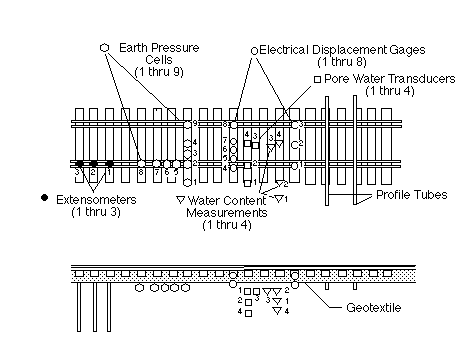
Figure 1. Instrumented railroad test site with geotextile acting as separators, after Richardson (1985).
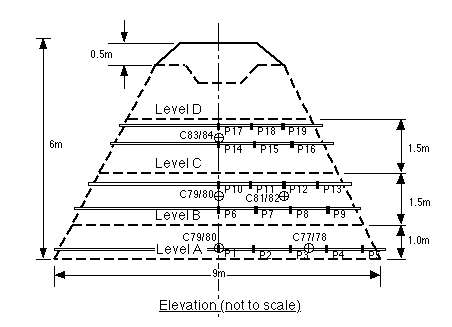
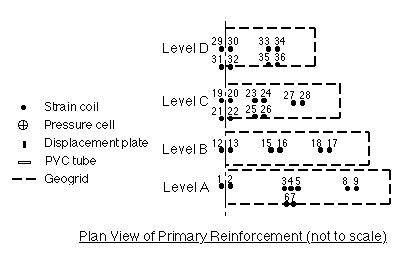
Figure 2. Instrumentation layout of geogrid reinforced steep soil slope,
after Hermann and Burd (1988).
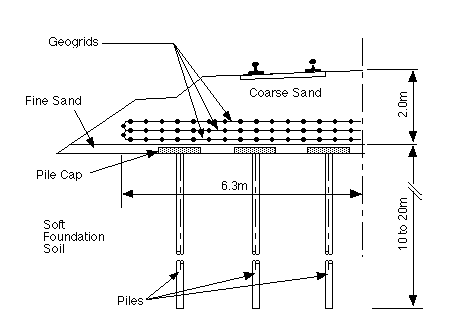
Figure 3. Geogrid reinforcement of a railroad embankment over soft foundation soil spanning pile caps,
Alexiew, et al. (1995).

Figure 4. Leakage monitoring via submersible pump within a side slope pipe riser.
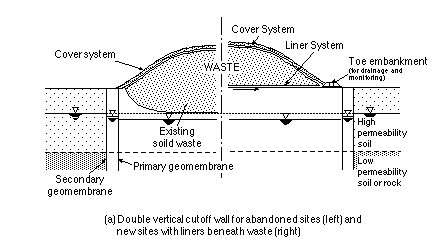
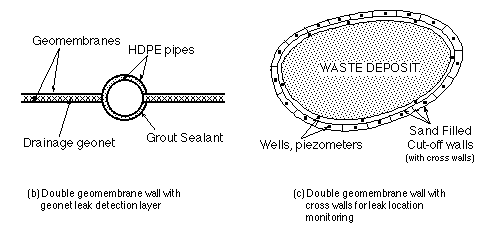
Figure 5. Vienna cutoff double wall system, after Brandl (1994).
Method to Bond Electrical Resistance Strain Gages to Geotextiles
This procedure for bonding electrical resistance strain gages to geotextiles is written around the following assumptions.
Recommended procedure for attaching a single strain gage is as follows:
1. A thin layer of silicone glue is applied to the fabric surface at the desired monitoring location. [Terostatt 33 from Teroson GmbH, Heidelberg, Germany and Dow Corning 3145 RTV MIL A-46146 adhesive/sealant, Midland, Michigan have been successfully used]
2. The strain gage and bondable terminal (for attachment of the leads) are pressed into the silicone using a thin PE cover film so as to remove all entrapped air. [Strain gages Type EP-08-40, CBY-120 from Micromeasurements, Inc., Romulus, Michigan have been successfully used]
3. The gage, terminal and silicone adhesive/sealant is subjected to a light compression loading and allowed to cure for a period of 24-hours.
4. After the adhesive has dried, the dead load is removed and the PE cover film is peeled away from the gage and terminal. Jumper wires with adequate slack are soldered from the gage to the adjacent terminal.
5. The required length of cable is spliced and soldered to the terminal.
6. After all electric connections are made, the gage and terminal areas are waterproofed with the adhesive sealant. While adequare waterproofing is essential it should be noted that excessive adhesive sealant can reinforce the affected area and mask the true response.
7. The cable leads are extended to the monitoring area with sufficient slack to account for distortion during backfilling and subsequent long term settlement or movement of the geotextile. A loop of wire may be included near the gage so that stress is not applied to the terminal connection.
8. Resistance is checked and recorded after installation is complete (and before backfilling) to ensure that the system is operable.
9. Readings are taken over time per the monitoring plan.
Method to Bond Electrical Resistance Strain Gages to Unitized Geogrids or Geomembranes
This procedure for bonding electrical resistance strain gages to unitized geogrids or geomembranes is written around the following assumptions.
Recommended procedure for attaching a single strain gage is as follows:
1. The location on the geogrid or geomembrane where the gage is to be mounted is lightly buffed with No. 8 sandpaper. Grinding and loss of cross sectional thickness is not permitted since it will lead to erroneous results.
2. The surface is brushed lightly with a cleaner and degreaser typically used for electrical equipment. National Chemsearch Lexite of Irving, Texas has been used with success.
3. An industrial adhesive is applied to the surface [Permabond 910reg. alpha cyanoacrylate ester has been successfully used]
4. The strain gage is pressed into the adhesive with an overlying thin plastic film being careful to work out all entrapped air. [Strain gages type Y11-FA-5-120 from Showa Measuring Instruments Co. (for geogrids) and Type EP-08-20CBW-120 from Micromeasurements, Inc., Romulus, Michigan (for geomembranes) have been successfully used]. Note that these are small strain gages and usually have the terminal attached to them from which the leads are extended.
5. The required length of cable is spliced and soldered to me terminal.
6. The strain gage, terminal and lead connection must be made watertight by using a flexible silicone waterproofing. A rubber jacket covering the spliced connection is considered good practice. Hot air shrink-fit sleeves have been used.
7. The cable leads are extended to the monitoring area with sufficient slack to account for distortion during backfilling and subsequent long term settlement or movement of the geogrid or geomembrane.
8. Resistance is checked and recorded after installation is complete (and before backfilling) to ensure that the system is operable.
9. Readings are taken over time per the monitoring plan.
Method to Use Inductance Coils to Measure Deformations of Flexible Geogrids
This procedure for using inductance coils to measure deformations of flexible geogrids is written around the following assumptions.
Recommended procedure for attaching a pair of coils is as follows:
1. Select the proper diameter coils on the basis of the intended separation distance. (Inductance coils are available from Bison Instruments, Inc., Minneapolis, MN, under the designation Model 4101 A "Soil Strain Gage").
2. Develop a calibration curve between the original separation distance of the two coils and the anticipated maximum movement distance during the monitoring time. The orientation of the coils with respect to one another must be compatible with that to be used in the field. (The instrument manufacturer markets a calibration device).
3. With the geogrid installed in its intended position in the field, attach the paired inductance coils to the geogrid at the desired locations. The attachment must be made with non-metallic ties, e.g., plastic electrical ties, and be secure enough so that the orientation remains fixed during the monitoring period.
4. Using the portable meter, record the amplitude reading and check that it properly correlates with the calibration curve for that distance and orientation.
5. Carefully hand backfill the gages and the lead cables and recheck the amplitude reading to verify that the coils were not moved or distorted out of alignment.
6. Backfill at least 300 mm of soil over the geogrid at the location of the coils using light weight construction equipment and take the initial amplitude readings. This value should be close to the calibration and as-installed amplitude readings.
7. Extend the cables to the monitoring area with adequate slack to account for subsequent long term settlement or movement of the geogrid.
8. Readings are taken over time per the monitoring plan.